
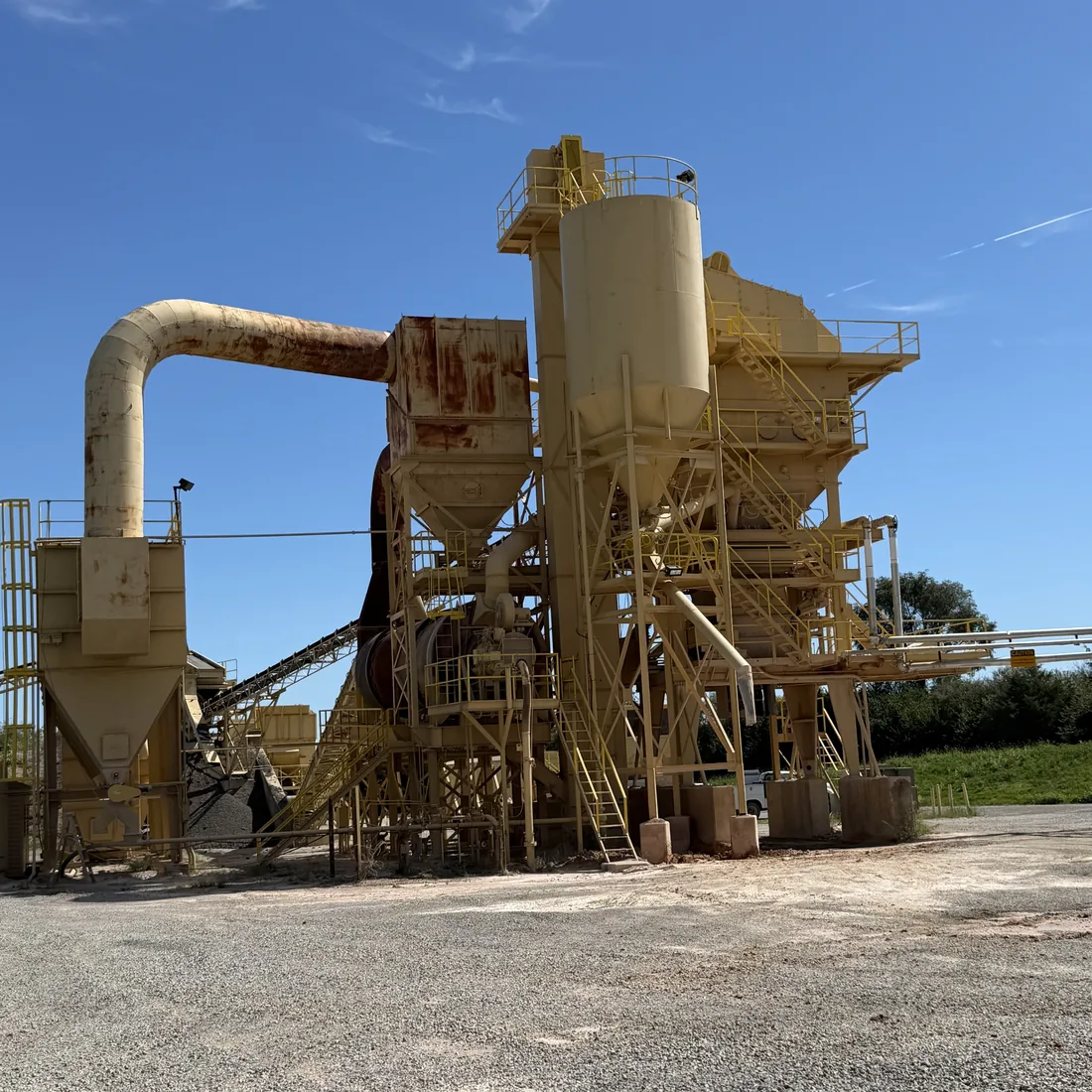
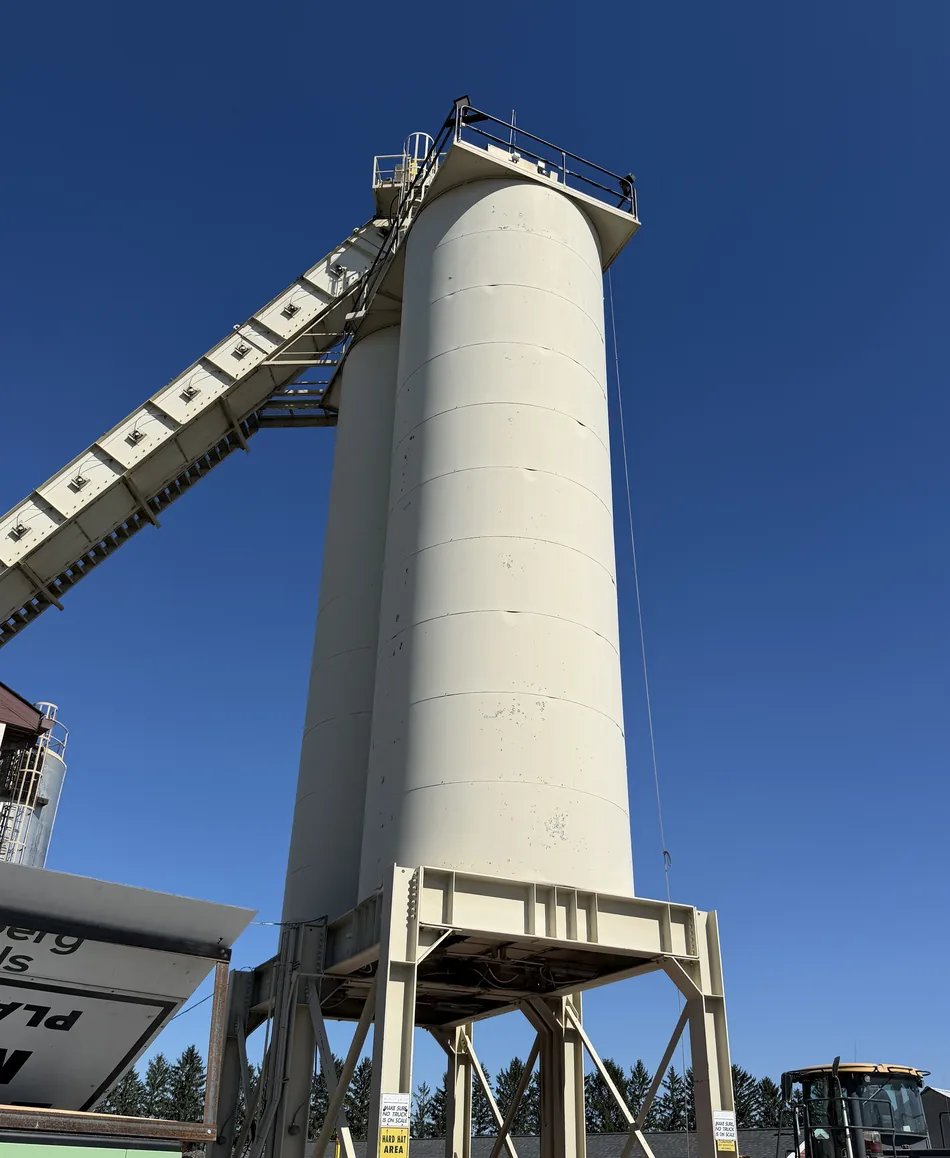
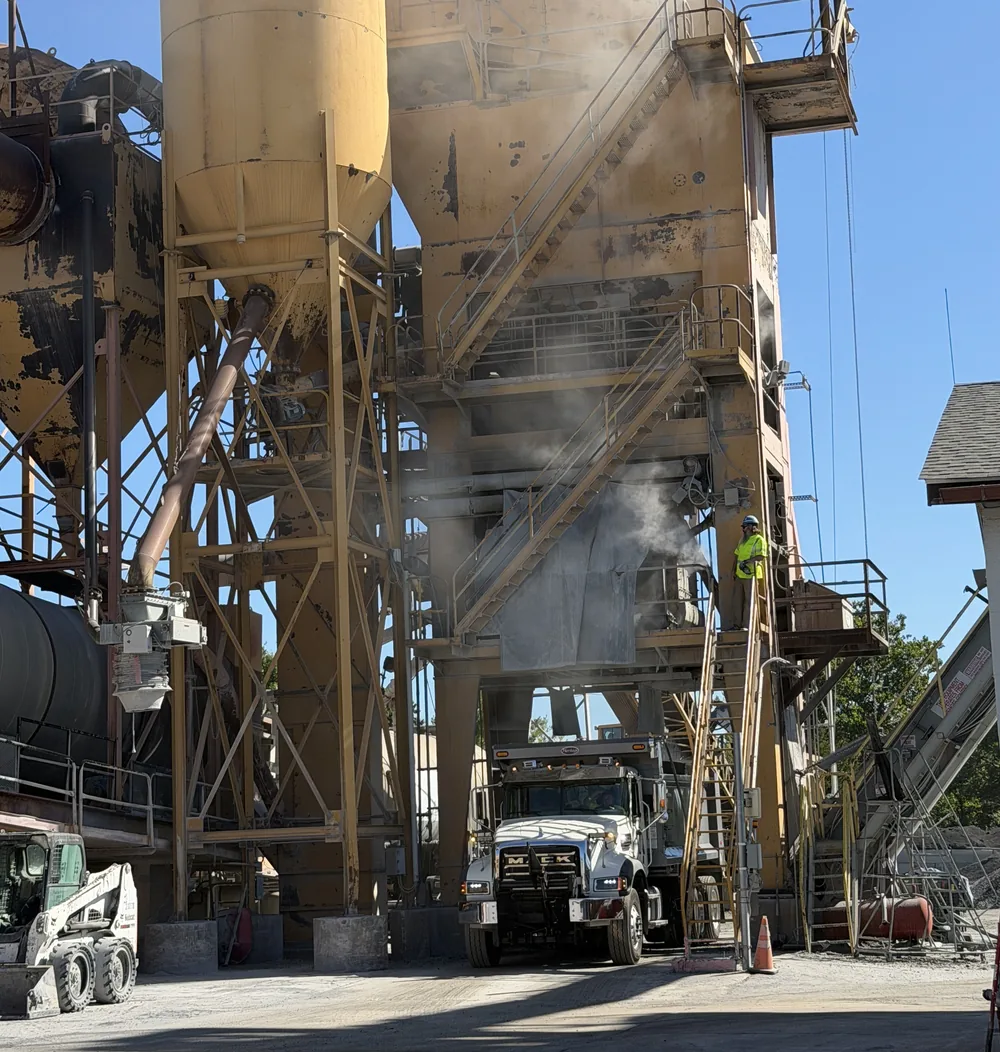
Growing up on a dairy farm in Cochranton, Pennsylvania, just one mile from an asphalt plant, gave me an early connection to the asphalt industry that ultimately shaped my career.
Learning the plant by hand
In 2003, while attending Thiel College and wrestling, I began working for Walter “Boots” Dunn at W.L. Dunn Construction. The job allowed me to earn the money necessary to commute from our family farm to Thiel, where I ultimately earned a bachelor's degree in Elementary Education and Secondary Mathematics.
My first summer at W.L. Dunn provided an asphalt education that would be difficult to replicate today. The company operated a 2.5-ton H&B batch plant that was not automated. I learned asphalt production from the ground up, manually operating the plant and pulling levers to control aggregate drops. That summer, we produced more than 100,000 tons of PennDOT-approved virgin HMA.
Operating the plant manually gave me a firsthand understanding of how each component of the production process works together and how seemingly small adjustments can affect efficiency, consistency, and mix quality. That hands-on experience became the foundation for how I approached asphalt production throughout my career.
Boots also taught me to look at production from a contractor's perspective. He had a unique approach to utilizing mobile silos, loading trucks early, and carrying a little additional heat when necessary to keep production moving efficiently. The objective was always to produce a quality product while keeping the operation productive and the projects profitable.
Two years later, after automating that same 2.5-ton batch plant, we produced a company-record 148,000 tons of asphalt.
Fifteen years running a plant
After graduating from Thiel, I had the opportunity to pursue a teaching career near my hometown, but I chose instead to continue building my career in asphalt. At age 24, I joined Joseph McCormick Construction as Plant Superintendent, taking responsibility for its 4-ton B.L.H. Madsen plant in April 2010.
Over the next 15 years, with the support of company leadership, we continually invested in the facility with a focus on increasing production, improving consistency, and incorporating higher percentages of recycled asphalt pavement. Improvements included a RAP pack, dust pod, variable-frequency drive for the exhaust fan, additional RAP equipment capable of handling fractionated recycled asphalt product, a weighted screen deck with self-cleaning bottom screens, crusher upgrades, a dedicated RAP building, and numerous other operational improvements.
Those investments, combined with changes in how we processed and managed materials, allowed us to efficiently incorporate approximately 25–30% RAP while continuing to produce consistent, high-quality mix. The facility ultimately developed the capability to efficiently produce approximately 230–250 tons per hour.
What I bring to your plant
My experience has taught me that successful RAP utilization involves much more than simply increasing the percentage of recycled material in a mix. RAP processing, fractionation, moisture management, material consistency, plant configuration, heat transfer, production rate, and mix design all have to work together. Understanding how those variables interact during actual plant production is an area where I believe my experience can provide significant value.
I hold a Pennsylvania Level 2 Asphalt Technician certification and particularly enjoy taking a mix design from the laboratory into plant production, dialing it in, troubleshooting issues, and developing practical solutions that operators can execute consistently every day.
Although I chose asphalt over the classroom, my background in education has remained an important part of my career. I enjoy teaching operators and plant personnel and helping people understand not only what adjustments need to be made, but why they work. I believe some of the best improvements happen when the people operating the equipment understand the entire production process and how their decisions affect the finished product.
The next chapter
On Father's Day 2026, I resigned from Joseph McCormick Construction and began the next chapter of my career as an owner-operator of Kelly Steel, while also providing asphalt plant engineering and consulting services to asphalt producers wherever those opportunities may take me.
After more than two decades of hands-on asphalt production experience, my focus is now on helping producers improve plant efficiency, optimize RAP utilization, troubleshoot production challenges, implement practical plant improvements, and consistently produce high-quality asphalt.
I take great pride in what I have accomplished throughout my career and look forward to bringing that experience to your operation and working alongside you and your team.